
The Squirrels of Fuerteventura

Small, fast, and bold, these squirrels have become true tourist attractions, often photographed like celebrities. Accustomed to seeing humans as sources of food, they fearlessly approach, taking treats directly from the hands of those offering them.
Sometimes, I marvel at their bravery: from their tiny perspective, we must look like huge, clumsy, noisy giants — hundreds of times their size. Yet despite this, they don’t hesitate to come close, succumbing to the temptations of their appetite.
Squirrels must also defend themselves against crows and many species of birds of prey that watch over these close encounters, ready to seize any moment of distraction to secure a meal.

African Squirrels in Fuerteventura
Also known as the “Ardilla Moruna,” the squirrels found in Fuerteventura are scientifically named Atlantoxerus getulus. They are not native to the island but originate from North Africa.
These small mammals grow up to 23 cm in body length and have coarse, long fur in shades of grey, dark brown, and light brown — perfectly suited to blending into the desert landscape.
Accustomed to extremely arid climates, they’ve adapted well to Fuerteventura by digging burrows in gravel and dry terrain — a behavior made possible by their long, strong claws.
They are highly adaptable to the dry climate and have learned to take advantage of the island’s many stone walls, allowing them to reproduce quickly and establish large populations.
Fuerteventura is a Biosphere Reserve
UNESCO has designated Fuerteventura as a Biosphere Reserve — a classification given to areas where terrestrial, coastal, and marine ecosystems are preserved through responsible land management. The goal is to promote conservation and biodiversity while ensuring the sustainable use of natural resources for the benefit of local communities.
However, the presence of squirrels poses a threat to the island’s delicate ecological balance. These non-native animals compete with local fauna such as wild rabbits and the Musaraña canaria — a small, timid rodent known as the “ratón de hocico largo” (long-snouted mouse). Their invasive behavior disrupts the natural ecosystem and endangers species that are already vulnerable.
Protecting the Squirrels of Fuerteventura
In the wild, squirrels feed on fruits, seeds, shrubs, and insects. Cooked or processed foods, commonly offered by humans, are unnatural and can be extremely harmful to their health.
Their lively and fearless nature often leads them to beg for food, and many visitors are tempted to feed them, forgetting that — despite their cuteness — squirrels are rodents, sometimes referred to as “rats with an attractive tail.” They can bite and may carry diseases.
While amused tourists enjoy taking photos as they feed them bread, cookies, or other snacks, the squirrels chew eagerly without realizing that such dry foods — paired with limited access to water — can leave them dehydrated and unwell.
For this reason, signs prohibiting the feeding of squirrels are posted at many scenic spots around the island. Unfortunately, these are often ignored.
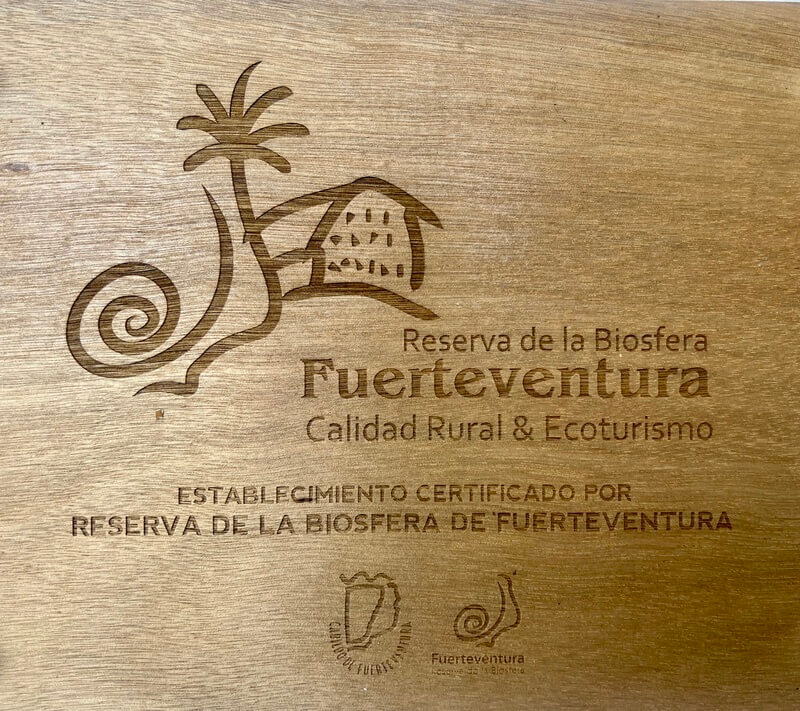
Alma Calma Hotel Rural is certified by the Fuerteventura Biosphere Reserve
At Alma Calma Hotel Rural, we are committed to sustainability and environmental respect in every possible way.
We believe the landscape is our greatest treasure — and for its preservation, we kindly ask you not to feed the squirrels.
If you’d like to interact with them, please offer them water instead of food.
Click here to discover the “good practices” of Alma Calma Hotel Rural for supporting local commerce and protecting the environment!